About
Sit amet, consectetur adipiscing elit. Aliquam feugiat metus non ex accumsan bibendum. Duis et enim quis ante elementum lobortis ut suscipit nisi. Ut lacinia odio id elit faucibus, in elementum sapien gravida. Morbi interdum urna sit.
Caroline Esbenshade is an American–Australian dual national artist and curator based in Shepparton, Victoria. Born in the United States and raised between the US and Japan, her practice is shaped by cross-cultural experience and a sustained engagement with material culture, art history, and feminist inquiry. She migrated to Australia in her twenties and holds a Bachelor of Arts in Studio Art from James Madison University and a Master of Art Curatorship from the University of Melbourne.
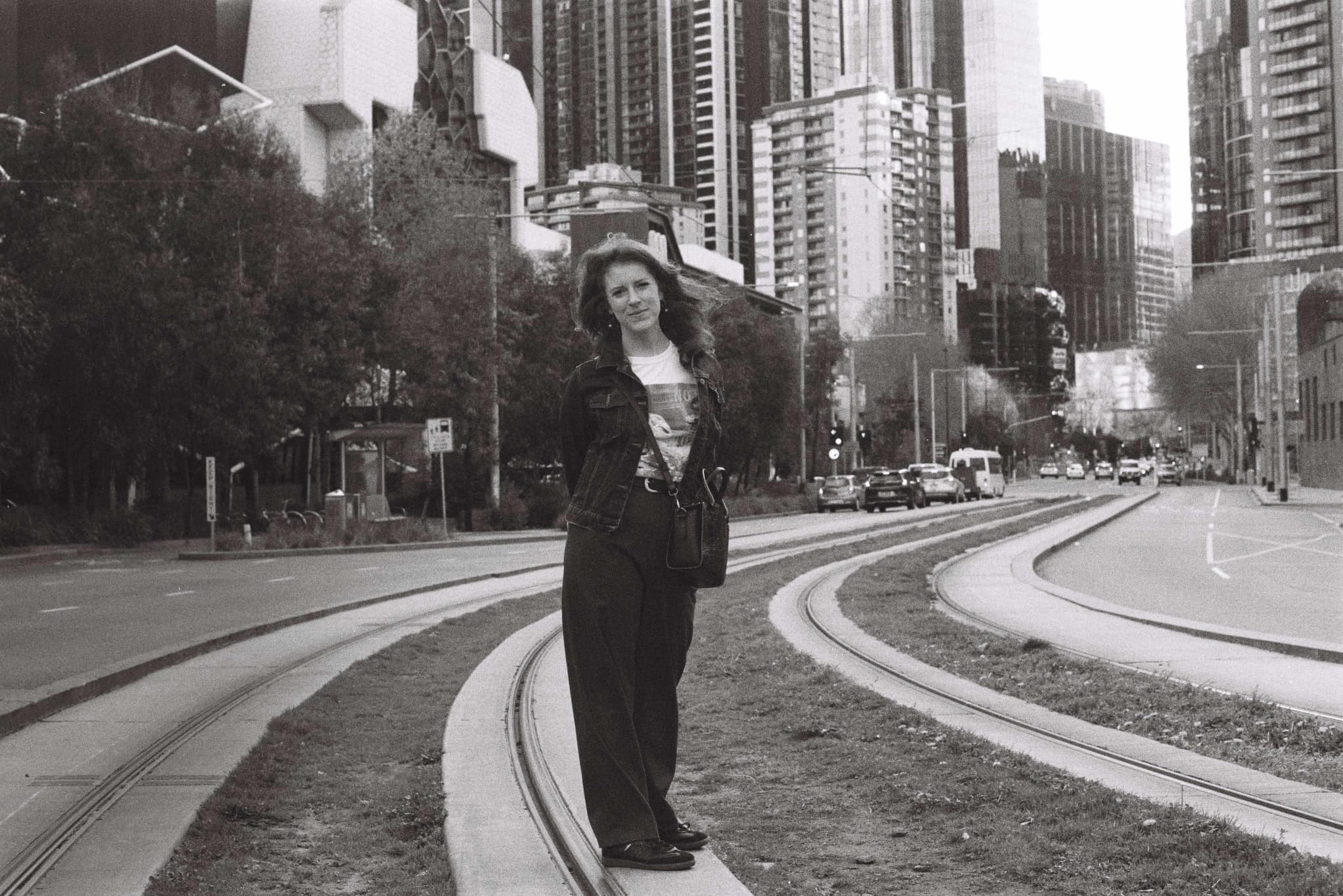
photo of the artist by Sean McComish.
Working primarily across painting and photography, with occasional forays into installation, Esbenshade’s artistic practice is informed by curatorial research and the Western canon, particularly the historical depiction of women as muse, allegory, or vessel. Through both making and curating, she seeks to reframe these inherited visual languages, repositioning women as active subjects with agency. She is drawn to the alchemical qualities of paint and analogue photography, which compress time and distil fleeting moments into tangible form.
Esbenshade’s curatorial practice draws on over fifteen years of experience in museums and galleries developed through lived experience, academic study, and research. She has worked across collection-based exhibitions, acquisitions, and community-focused programs, with a curatorial approach that prioritises rigorous research, artist and object-led storytelling, and feminist and cross-cultural perspectives. She is currently a curator at Shepparton Art Museum, where she contributes to collection exhibitions, artist development initiatives, and public-facing programs while maintaining a creative practice as an artist.
caroline[@]cesbenshade.com
@caroline_esbenshade